Every summer, Yellowstone's parking lots fill by 9 AM and the boardwalks at Old Faithful turn into a slow shuffle of strangers. Then, sometime after Labor Day, something shifts. The crowds that defined July evaporate, the cottonwoods along the Yellowstone River start turning gold, and the bull elk start sounding off in the meadows. October is the month a lot of people overlook and almost everyone who's been there tells you to try.
It is not a secret exactly, more a trade-off that most travelers haven't thought through. You give up some lodging options, some weather certainty, and a fully open park. In exchange you get a version of Yellowstone that feels, for a few weeks, almost empty.
Why October is underrated
Most American family travel ends abruptly after Labor Day, and what's left thins out again once early fall school breaks wrap up. By the time October arrives, the visitor numbers that choke the Grand Loop in July have dropped off a cliff. You can pull into the Old Faithful lot, find a spot, and walk straight to the boardwalk. That alone changes the character of a trip.
The scenery changes with the calendar too. Aspens and cottonwoods around Mammoth Hot Springs, the Lamar Valley, and the rest of the northern range turn shades of yellow and orange that you simply don't see in summer, set against the dark green of the lodgepole forests and the first dustings of snow on the high peaks.
Then there's the elk. The elk rut peaks in September and tapers through the first half of October, when bull elk bugle to announce themselves and gather harems. Catch it early in the month and the animals are still noticeably more active and more visible than in summer. Mammoth Hot Springs village is the famous stage for this: elk wander right through the developed area, bedding down on lawns and bugling between buildings, close enough that rangers rope off areas to keep people back. Bulls are genuinely dangerous this time of year, so give them the room the park asks for. Add bison and pronghorn drifting toward lower elevations as temperatures drop, and fall ranks alongside spring as one of the best wildlife-watching stretches of the year. No guarantees, wildlife here never runs on a schedule, but the odds tilt in your favor.
What's open vs. closed: the critical caveat
Here is the part that actually matters for planning, and it's worth reading twice before you book anything: Yellowstone scales down hard in the fall. Many in-park lodges, restaurants, and visitor services begin closing for the season as early as September, and the pace of closures picks up through October. By some point in October, most in-park hospitality is shut down for the winter, the exact dates vary property by property and year by year, and they are not the same every season. For the bigger picture on how closures and weather risk play out across the whole calendar, see our month-by-month breakdown of Yellowstone snow risk and road closures.
Before you book anything
Do not assume a specific lodge, campground, restaurant, or visitor center will be open on your travel dates just because it was open last October. Closing dates shift from year to year depending on staffing, weather, and operational decisions made by the park and its concessioner.
Check the current-year closing dates directly on nps.gov/yell or through Yellowstone National Park Lodges' official site before you make a single reservation. This is the single most important piece of homework for an October trip.
The road network follows its own, separate shutdown schedule. Most interior park roads typically stay open to regular vehicle traffic into early November, but the exact date is announced by the NPS each fall and varies year to year depending on snowfall. The high-elevation roads close earlier: Dunraven Pass, the Beartooth Highway, and the Chief Joseph Scenic Byway often shut for the season around mid-October, weeks before the rest. One stretch runs the other way: the road from the North Entrance at Gardiner through Mammoth and Tower Junction out to the Northeast Entrance and Cooke City stays open to vehicles year-round, snowplowed through the winter (weather permitting), which is part of why Mammoth remains a viable base later in the season than almost anywhere else in the park.
The short version: don't assume anything is open in October. Lodges, restaurants, visitor centers, campgrounds, and roads each close on their own schedule, and the dates move year to year. Check the current ones before you build an itinerary around them.
Weather reality
October is a transition month, shoulder season sliding into winter, and it can feel like either depending on the week. Early October can bring mild, clear days in the 50s and 60s°F, especially at lower elevations like Mammoth and the northern range. Snow becomes a real and growing possibility as the month goes on, particularly in the back half and up high. The high passes go first: Dunraven Pass and the roads through the Beartooth area see snow well before the valleys do. The Beartooth Highway usually closes for the season around mid-October, weather permitting, well ahead of the interior park roads, so check its status separately if that route is part of your plan. Dunraven tends to hang on longer, closing late in the month or with the rest of the interior roads, but a heavy snowfall can shut it earlier.
Conditions can swing within a matter of days, sometimes hours. A 70°F afternoon at Mammoth can be followed by a morning with frost on the windshield and snow on the passes a few thousand feet higher. Pack layers, bring a real coat even if the forecast looks mild, and go in with the mental flexibility to adjust your plans if a road or trail isn't cooperating. Daylight is also noticeably shorter than in summer, plan your driving and wildlife-watching windows accordingly rather than assuming you'll have light until 9 PM the way you would in July.
What you can still do
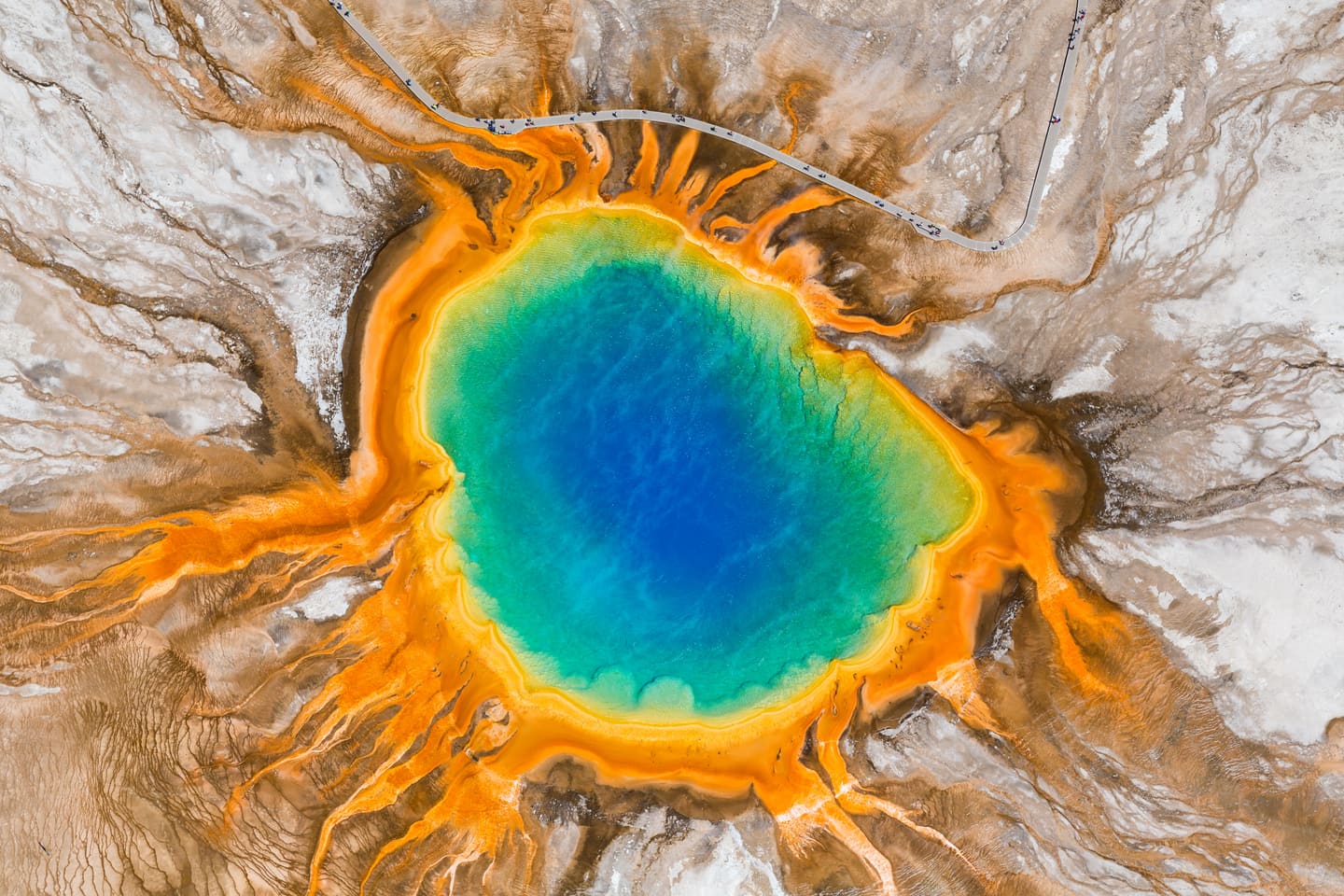
Despite the caveats above, there's a lot of October left once you plan around it. The major boardwalk basins, Old Faithful, Midway/Grand Prismatic, West Thumb, and Norris, are generally still open and dramatically less crowded than in summer. You can walk the Upper Geyser Basin loop or stand at the Grand Prismatic overlook without fighting for boardwalk space.
Driving the Grand Loop itself is a different experience with light traffic, no bison-jam backups stretching for a mile, no hunting for a parking spot at every pull-out. Lamar Valley and Hayden Valley wildlife-watching is strong this month, with lingering rut activity early on and animals shifting toward lower-elevation winter range, which makes them easier to spot from the road.
Fall color in the northern range tends to peak somewhere in the window from late September into early or mid-October, though the exact week varies by year and by elevation, higher ground turns first. Treat any specific date as a guess rather than a promise, and build in a few flexible days if peak color is the main goal of your trip.
Planning a shoulder-season trip?
Sign up for early access and we'll send you season-specific guides as the app comes together, including what's open week by week.
Booking and logistics tips
Shoulder season availability is real, but it's limited, not endless. As properties wind down for the year, the remaining open rooms and campsites get scarcer, not more abundant. Book whatever's still open as early as you can rather than assuming you can wait until a month out.
Gateway towns, West Yellowstone, Gardiner, and Cody, generally stay open later into the season than in-park lodges, and can make a solid base if in-park rooms are already gone by the time you book. Gardiner is especially useful given that the Mammoth–Gardiner road stays open year-round.
Pack for both ends of the forecast: shorts-and-a-fleece weather and an honest snowstorm, in the same week, on the same trip. If you're visiting in the back half of October, check tire and chain requirements for mountain driving before you go, conditions on passes like Dunraven can turn icy faster than the forecast suggests.
Verify lodge & campground closing dates
Check nps.gov/yell or Yellowstone National Park Lodges' official site for current-year dates before booking anything, in-park or in the gateway towns.
Check road status before you drive
Interior roads begin closing in early November, dates vary by year. Confirm current conditions on the NPS Yellowstone road status page each morning.
Pack for two seasons at once
Bring layers for 60°F afternoons and real winter gear for snow, especially at elevation. Don't trust a single forecast for the whole trip.
Book early despite the "shoulder season" feel
Fewer rooms are open, not more. What's left fills up as properties wind down for winter.
Consider a gateway-town base
West Yellowstone, Gardiner, and Cody typically stay open later than in-park lodges and give you more flexibility.
Check tire and chain requirements
If you're visiting in the back half of October, confirm mountain driving requirements, especially for passes like Dunraven.
Plan around shorter daylight
Sunrise wildlife drives and sunset photography windows shift earlier than you'd expect coming from a summer trip.
Build in flexible days
If fall color or wildlife is your main goal, leave room in the itinerary to adjust, neither follows a fixed calendar.
Who October is and isn't for
October rewards a particular kind of traveler. If you're a photographer chasing golden light and fall color, a wildlife watcher hoping to hear elk bugling across a meadow, or someone who simply can't stand fighting for a parking spot at Old Faithful, this is likely one of the best months you could pick. The trade-offs are real, but so are the rewards.
It's a tougher fit if you want guaranteed access to every lodge, restaurant, and visitor facility, or if you can't tolerate a trip plan that might need to bend around a surprise snowstorm or a road closure announced with a few days' notice. If a fixed, fully-staffed, every-amenity-open Yellowstone is what you're after, July still does that better. October asks for a little more flexibility, and gives back a quieter, wilder version of the park in return. If you're still weighing timing, it's worth comparing this against what late August looks like in terms of crowds and heat, since the two months sit at opposite ends of the shoulder season trade-off.